ENBREL
etanercept
Quick Facts
Rheumatoid Arthritis
Enbrel is used to reduce pain and swelling, help the disease respond to treatment, stop joint damage, and improve movement in patients with moderate to severe rheumatoid arthritis. It can be used with methotrexate or alone.
Polyarticular Juvenile Idiopathic Arthritis
Enbrel is used to reduce pain and swelling in children 2 years and older with moderate to severe polyarticular juvenile idiopathic arthritis.
Psoriatic Arthritis
Enbrel is used to reduce pain and swelling, stop joint damage, and improve movement in adults with psoriatic arthritis. It can be used with or without methotrexate.
Ankylosing Spondylitis
Enbrel is used to reduce pain and swelling in patients with active ankylosing spondylitis.
Plaque Psoriasis
Enbrel is used to treat patients 4 years and older with moderate to severe plaque psoriasis who need systemic therapy or phototherapy.
Juvenile Psoriatic Arthritis
Enbrel is used to treat active juvenile psoriatic arthritis in children 2 years and older.
1.1 Rheumatoid Arthritis
Enbrel is indicated for reducing signs and symptoms, inducing major clinical response, inhibiting the progression of structural damage, and improving physical function in patients with moderately to severely active rheumatoid arthritis (RA). Enbrel can be initiated in combination with methotrexate (MTX) or used alone.
1.2 Polyarticular Juvenile Idiopathic Arthritis
Enbrel is indicated for reducing signs and symptoms of moderately to severely active polyarticular juvenile idiopathic arthritis (pJIA) in patients 2 years of age and older.
1.3 Psoriatic Arthritis
Enbrel is indicated for reducing signs and symptoms, inhibiting the progression of structural damage of active arthritis, and improving physical function in adult patients with psoriatic arthritis (PsA). Enbrel can be used with or without methotrexate.
1.4 Ankylosing Spondylitis
Enbrel is indicated for reducing signs and symptoms in patients with active ankylosing spondylitis (AS).
1.5 Plaque Psoriasis
Enbrel is indicated for the treatment of patients 4 years or older with chronic moderate to severe plaque psoriasis (PsO) who are candidates for systemic therapy or phototherapy.
1.6 Juvenile Psoriatic Arthritis
Enbrel is indicated for the treatment of active juvenile psoriatic arthritis (JPsA) in pediatric patients 2 years of age and older.
Testing Before Treatment
Before starting Enbrel, your doctor will check you for tuberculosis (TB). You may need a TB test. Make sure all your vaccines are up to date before starting treatment.
How Enbrel Is Given
Enbrel is given as an injection under the skin. A 50 mg dose can be given as one 50 mg syringe or as two 25 mg syringes.
Dose for Adults
– Rheumatoid arthritis, ankylosing spondylitis, psoriatic arthritis: 50 mg once per week
– Plaque psoriasis: 50 mg twice per week for 3 months, then 50 mg once per week
You may keep taking methotrexate, pain relievers, or anti-inflammatory medicines while on Enbrel.
Dose for Children
– 63 kg (138 pounds) or more: 50 mg once per week
– Less than 63 kg: 0.8 mg per kg of body weight once per week
How to Give the Injection
You can inject Enbrel in the thigh, belly, or outer arm. Your doctor will teach you how to give yourself the injection.
Before Injecting
– Let the medicine warm to room temperature for 15 to 30 minutes
– Check that the liquid is clear or slightly cloudy with small white particles
– Do not use if the liquid is cloudy, discolored, or has particles
Using the Prefilled Syringe
Make sure the liquid is between the two lines on the syringe. Do not use if the amount is wrong.
Using the Autoinjector
Let the device warm to room temperature for at least 30 minutes before use.
Using the Vial
You may need two vials for your dose. Use a 1 mL syringe with a 22-gauge needle to draw the medicine. Use a 27-gauge needle to inject.
Using the Multi-dose Vial
Mix the powder with 1 mL of water. Store in the fridge. Use within 14 days. Do not freeze.
Using the AutoTouch Device
Insert the cartridge into the device. Close the door. The device is ready to use.
Important Safety Notes
– Do not shake the medicine
– Do not mix with other medicines
– Throw away any unused medicine after 14 days
| Patient Population | Recommended Dosage |
|---|---|
| Adult RA, AS, and PsA | 50 mg weekly |
| Adult PsO | Starting Dose: 50 mg twice weekly for 3 months Maintenance Dose: 50 mg once weekly |
| Body Weight | Recommended Dosage |
|---|---|
| 63 kg (138 pounds) or more | 50 mg weekly |
| Less than 63 kg (138 pounds) | 0.8 mg/kg weekly |
2.1 Testing and Procedures Prior to Treatment Initiation
Perform the following evaluations and procedures prior to initiating treatment with Enbrel:
• Prior to initiating Enbrel and periodically during therapy, evaluate patients for active tuberculosis and test for latent infection [see Warnings and Precautions (5.1) ].
• Complete all age-appropriate vaccinations as recommended by current immunization guidelines prior to initiating treatment with Enbrel [see Warnings and Precautions (5.8) ].
2.2 Important Administration Instructions
Administration of one 50 mg Enbrel single – dose prefilled syringe, one single – dose prefilled Enbrel SureClick autoinjector, or one Enbrel Mini single – dose prefilled cartridge (for use with the AutoTouch reusable autoinjector only), provides a dose equivalent to two 25 mg Enbrel single-dose prefilled syringes, two 25 mg single – dose vials, or two multiple-dose vials of lyophilized Enbrel, when multiple – dose vials are reconstituted and administered as recommended.
2.3 Recommended Dosage in Adult Patients with Rheumatoid Arthritis, Ankylosing Spondylitis, Psoriatic Arthritis, and Plaque Psoriasis
| Patient Population | Recommended Dosage |
|---|---|
| Adult RA, AS, and PsA | 50 mg weekly |
| Adult PsO | Starting Dose: 50 mg twice weekly for 3 months Maintenance Dose: 50 mg once weekly |
| Body Weight | Recommended Dosage |
|---|---|
| 63 kg (138 pounds) or more | 50 mg weekly |
| Less than 63 kg (138 pounds) | 0.8 mg/kg weekly |
Dosage Forms
• Shot: 25 mg/0.5 mL or 50 mg/mL clear liquid in a prefilled syringe
• Shot: 50 mg/mL clear liquid in a prefilled SureClick autoinjector
• Shot: 25 mg/0.5 mL clear liquid in a single-dose vial
• For injection: 25 mg powder in a vial, mixed with liquid before use
• Shot: 50 mg/mL clear liquid in a prefilled cartridge, used with AutoTouch reusable autoinjector only
• Injection: 25 mg/0.5 mL and 50 mg/mL clear, colorless solution in a single-dose prefilled syringe
• Injection: 50 mg/mL clear, colorless solution in a single-dose prefilled SureClick autoinjector
• Injection: 25 mg/0.5 mL clear, colorless solution in a single-dose vial
• For Injection: 25 mg lyophilized powder in a multiple-dose vial for reconstitution
• Injection: 50 mg/mL clear, colorless solution in Enbrel Mini single-dose prefilled cartridge for use with the AutoTouch reusable autoinjector only
Enbrel is contraindicated in patients with sepsis.
Serious Infections
Enbrel raises your risk of serious infections. These infections may need hospital care or cause death. They can affect different parts of your body.
Do not start Enbrel if you have an infection. Older patients and those taking other medicines that weaken the immune system may have higher risk. Watch for signs of infection during and after treatment. Stop Enbrel if you develop a serious infection.
Tuberculosis
TB infections have been seen in patients taking Enbrel. Some patients got TB even after testing negative before treatment. Get tested for TB before starting Enbrel and during treatment.
Treatment to prevent TB may be needed before starting Enbrel if you have TB risk factors.
Invasive Fungal Infections
Serious fungal infections have been reported with Enbrel. If you live in areas where fungal infections are common, watch for signs of serious illness.
Neurologic Reactions
Rare nerve problems have been reported with Enbrel. These include multiple sclerosis, nerve inflammation, and other nerve disorders. Use caution if you have existing nerve problems.
Malignancies
Lymphoma and other cancers have been reported in patients taking Enbrel. The risk may be higher in patients with rheumatoid arthritis. Skin cancer has also been reported. Have regular skin exams.
Heart Failure
Enbrel may worsen heart failure in some patients. New heart failure has also been rarely reported. Use caution if you have heart failure.
Blood Problems
Rare blood problems including low blood cell counts have occurred. Watch for fever, bruising, or feeling very tired. Get help right away if these occur.
Hepatitis B
Hepatitis B can come back in patients who had it before. This can be serious. Get tested before starting Enbrel.
Allergic Reactions
Allergic reactions can happen. If severe, stop Enbrel and get medical help right away.
Vaccines
Live vaccines should not be given while on Enbrel. Get up to date with vaccines before starting Enbrel.
Autoimmunity
Enbrel may cause your body to make antibodies against itself. Rarely, this can lead to lupus-like conditions. Stop Enbrel if this happens.
Immunosuppression
Enbrel affects your body’s ability to fight infections.
Not for Use with Certain Medicines
Do not use Enbrel with anakinra or abatacept.
Liver Disease
Use caution in patients with moderate to severe alcoholic liver disease.
5.1 Serious Infections
Patients treated with Enbrel are at increased risk for developing serious infections involving various organ systems and sites that may lead to hospitalization or death.
Opportunistic infections due to bacterial, mycobacterial, invasive fungal, viral, parasitic, or other opportunistic pathogens including aspergillosis, blastomycosis, candidiasis, coccidioidomycosis, histoplasmosis, legionellosis, listeriosis, pneumocystosis, and tuberculosis have been reported with TNF-blockers. Patients have frequently presented with disseminated rather than localized disease.
Treatment with Enbrel should not be initiated in patients with an active infection, including clinically important localized infections. Patients greater than 65 years of age, patients with co-morbid conditions, and/or patients taking concomitant immunosuppressants (such as corticosteroids or methotrexate), may be at greater risk of infection. The risks and benefits of treatment should be considered prior to initiating therapy in patients:
• With chronic or recurrent infection;
• Who have been exposed to tuberculosis;
• With a history of an opportunistic infection;
• Who have resided or traveled in areas of endemic tuberculosis or endemic mycoses, such as histoplasmosis, coccidioidomycosis, or blastomycosis; or
• With underlying conditions that may predispose them to infection, such as advanced or poorly controlled diabetes [see Adverse Reactions (6.1) ].
Patients should be closely monitored for the development of signs and symptoms of infection during and after treatment with Enbrel.
Enbrel should be discontinued if a patient develops a serious infection or sepsis. A patient who develops a new infection during treatment with Enbrel should be closely monitored, undergo a prompt and complete diagnostic workup appropriate for an immunocompromised patient, and appropriate antimicrobial therapy should be initiated.
Tuberculosis
Cases of reactivation of tuberculosis or new tuberculosis infections have been observed in patients receiving Enbrel, including patients who have previously received treatment for latent or active tuberculosis. Data from clinical trials and preclinical studies suggest that the risk of reactivation of latent tuberculosis infection is lower with Enbrel than with TNF-blocking monoclonal antibodies. Nonetheless, postmarketing cases of tuberculosis reactivation have been reported for TNF-blockers, including Enbrel. Tuberculosis has developed in patients who tested negative for latent tuberculosis prior to initiation of therapy. Patients should be evaluated for tuberculosis risk factors and tested for latent infection prior to initiating Enbrel and periodically during therapy. Tests for latent tuberculosis infection may be falsely negative while on therapy with Enbrel.
Treatment of latent tuberculosis infection prior to therapy with TNF-blocking agents has been shown to reduce the risk of tuberculosis reactivation during therapy. Induration of 5 mm or greater with tuberculin skin testing should be considered a positive test result when assessing if treatment for latent tuberculosis is needed prior to initiating Enbrel, even for patients previously vaccinated with Bacillus Calmette-Guerin (BCG).
Anti-tuberculosis therapy should also be considered prior to initiation of Enbrel in patients with a past history of latent or active tuberculosis in whom an adequate course of treatment cannot be confirmed, and for patients with a negative test for latent tuberculosis but having risk factors for tuberculosis infection. Consultation with a physician with expertise in the treatment of tuberculosis is recommended to aid in the decision whether initiating anti-tuberculosis therapy is appropriate for an individual patient.
Tuberculosis should be strongly considered in patients who develop a new infection during Enbrel treatment, especially in patients who have previously or recently traveled to countries with a high prevalence of tuberculosis, or who have had close contact with a person with active tuberculosis.
Invasive Fungal Infections
Cases of serious and sometimes fatal fungal infections, including histoplasmosis, have been reported with TNF-blockers, including Enbrel. For patients who reside or travel in regions where mycoses are endemic, invasive fungal infection should be suspected if they develop a serious systemic illness. Appropriate empiric anti-fungal therapy should be considered while a diagnostic workup is being performed. Antigen and antibody testing for histoplasmosis may be negative in some patients with active infection. When feasible, the decision to administer empiric anti-fungal therapy in these patients should be made in consultation with a physician with expertise in the diagnosis and treatment of invasive fungal infections and should take into account both the risk for severe fungal infection and the risks of anti-fungal therapy. In 38 Enbrel clinical trials and 4 cohort studies in all approved indications representing 27,169 patient-years of exposure (17,696 patients) from the United States and Canada, no histoplasmosis infections were reported among patients treated with Enbrel.
5.2 Neurologic Reactions
Treatment with TNF-blocking agents, including Enbrel, has been associated with rare (< 0.1%) cases of new onset or exacerbation of central nervous system demyelinating disorders, some presenting with mental status changes and some associated with permanent disability, and with peripheral nervous system demyelinating disorders. Cases of transverse myelitis, optic neuritis, multiple sclerosis, Guillain-Barre syndromes, other peripheral demyelinating neuropathies, and new onset or exacerbation of seizure disorders have been reported in postmarketing experience with Enbrel therapy. Prescribers should exercise caution in considering the use of Enbrel in patients with preexisting or recent-onset central or peripheral nervous system demyelinating disorders [see Postmarketing Experience (6.3) ].
5.3 Malignancies
Lymphomas
In the controlled portions of clinical trials of TNF-blocking agents, more cases of lymphoma have been observed among patients receiving a TNF-blocker compared to control patients. During the controlled portions of Enbrel trials in adult patients with RA, AS, and PsA, 2 lymphomas were observed among 3306 Enbrel-treated patients versus 0 among 1521 control patients (duration of controlled treatment ranged from 3 to 36 months).
Among 6543 adult rheumatology (RA, PsA, AS) patients treated with Enbrel in controlled and uncontrolled portions of clinical trials, representing approximately 12,845 patient-years of therapy, the observed rate of lymphoma was 0.10 cases per 100 patient-years. This was 3-fold higher than the rate of lymphoma expected in the general U.S. population based on the Surveillance, Epidemiology, and End Results (SEER) Database. An increased rate of lymphoma up to several-fold has been reported in the RA patient population, and may be further increased in patients with more severe disease activity.
Among 4410 adult PsO patients treated with Enbrel in clinical trials up to 36 months, representing approximately 4278 patient-years of therapy, the observed rate of lymphoma was 0.05 cases per 100 patient-years, which is comparable to the rate in the general population. No cases were observed in Enbrel- or placebo-treated patients during the controlled portions of these trials.
Leukemia
Cases of acute and chronic leukemia have been reported in association with postmarketing TNF-blocker use in rheumatoid arthritis and other indications. Even in the absence of TNF-blocker therapy, patients with rheumatoid arthritis may be at higher risk (approximately 2-fold) than the general population for the development of leukemia.
During the controlled portions of Enbrel trials, 2 cases of leukemia were observed among 5445 (0.06 cases per 100 patient-years) Enbrel-treated patients versus 0 among 2890 (0%) control patients (duration of controlled treatment ranged from 3 to 48 months).
Among 15,401 patients treated with Enbrel in controlled and open portions of clinical trials representing approximately 23,325 patient-years of therapy, the observed rate of leukemia was 0.03 cases per 100 patient-years.
Other Malignancies
Information is available from 10,953 adult patients with 17,123 patient-years and 696 pediatric patients with 1282 patient-years of experience across 45 Enbrel clinical studies.
For malignancies other than lymphoma and non-melanoma skin cancer, there was no difference in exposure-adjusted rates between the Enbrel and control arms in the controlled portions of clinical studies for all indications. Analysis of the malignancy rate in combined controlled and uncontrolled portions of studies has demonstrated that types and rates are similar to what is expected in the general U.S. population based on the SEER database and suggests no increase in rates over time. Whether treatment with Enbrel might influence the development and course of malignancies in adults is unknown.
Melanoma and Non-Melanoma Skin Cancer (NMSC)
Melanoma and non-melanoma skin cancer has been reported in patients treated with TNF antagonists including etanercept.
Among 15,401 patients treated with Enbrel in controlled and open portions of clinical trials representing approximately 23,325 patient-years of therapy, the observed rate of melanoma was 0.043 cases per 100 patient-years.
Among 3306 adult rheumatology (RA, PsA, AS) patients treated with Enbrel in controlled clinical trials representing approximately 2669 patient-years of therapy, the observed rate of NMSC was 0.41 cases per 100 patient-years versus 0.37 cases per 100 patient-years among 1521 control-treated patients representing 1077 patient-years. Among 1245 adult PsO patients treated with Enbrel in controlled clinical trials, representing approximately 283 patient-years of therapy, the observed rate of NMSC was 3.54 cases per 100 patient-years versus 1.28 cases per 100 patient-years among 720 control-treated patients representing 156 patient-years.
Postmarketing cases of Merkel cell carcinoma have been reported very infrequently in patients treated with Enbrel.
Periodic skin examinations should be considered for all patients at increased risk for skin cancer.
Pediatric Patients
Malignancies, some fatal, have been reported among children, adolescents, and young adults who received treatment with TNF-blocking agents (initiation of therapy at ≤ 18 years of age), including Enbrel. Approximately half the cases were lymphomas, including Hodgkin’s and non-Hodgkin’s lymphoma. The other cases represented a variety of different malignancies and included rare malignancies usually associated with immunosuppression and malignancies that are not usually observed in children and adolescents. The malignancies occurred after a median of 30 months of therapy (range 1 to 84 months). Most of the patients were receiving concomitant immunosuppressants. These cases were reported postmarketing and are derived from a variety of sources, including registries and spontaneous postmarketing reports.
In clinical trials of 1140 pediatric patients representing 1927.2 patient-years of therapy, no malignancies, including lymphoma or NMSC, have been reported.
Postmarketing Use
In global postmarketing adult and pediatric use, lymphoma and other malignancies have been reported.
5.4 New Onset or Worsening of Heart Failure
Two clinical trials evaluating the use of Enbrel in the treatment of heart failure were terminated early due to lack of efficacy. One of these studies suggested higher mortality in Enbrel-treated patients compared to placebo [see Adverse Reactions (6.2) ]. There have been postmarketing reports of worsening of congestive heart failure (CHF), with and without identifiable precipitating factors, in patients taking Enbrel. There have also been rare (< 0.1%) reports of new onset CHF, including CHF in patients without known preexisting cardiovascular disease. Some of these patients have been under 50 years of age. Physicians should exercise caution when using Enbrel in patients who also have heart failure, and monitor patients carefully.
5.5 Hematologic Reactions
Rare (< 0.1%) reports of pancytopenia, including very rare (< 0.01%) reports of aplastic anemia, some with a fatal outcome, have been reported in patients treated with Enbrel. The causal relationship to Enbrel therapy remains unclear. Although no high-risk group has been identified, caution should be exercised in patients being treated with Enbrel who have a previous history of significant hematologic abnormalities. All patients should be advised to seek immediate medical attention if they develop signs and symptoms suggestive of blood dyscrasias or infection (e.g., persistent fever, bruising, bleeding, pallor) while on Enbrel. Discontinuation of Enbrel therapy should be considered in patients with confirmed significant hematologic abnormalities.
Two percent of patients treated concurrently with Enbrel and anakinra developed neutropenia (ANC < 1 × 10⁹/L). While neutropenic, one patient developed cellulitis that resolved with antibiotic therapy.
5.6 Hepatitis B Reactivation
Reactivation of hepatitis B in patients who were previously infected with the hepatitis B virus (HBV) and had received concomitant TNF-blocking agents, including very rare cases (< 0.01%) with Enbrel, has been reported. In some instances, hepatitis B reactivation occurring in conjunction with TNF-blocker therapy has been fatal. The majority of these reports have occurred in patients concomitantly receiving other medications that suppress the immune system, which may also contribute to hepatitis B reactivation. Patients at risk for HBV infection should be evaluated for prior evidence of HBV infection before initiating TNF-blocker therapy. Prescribers should exercise caution in prescribing TNF-blockers in patients previously infected with HBV. Adequate data are not available on the safety or efficacy of treating patients who are carriers of HBV with anti-viral therapy in conjunction with TNF-blocker therapy to prevent HBV reactivation. Patients previously infected with HBV and requiring treatment with Enbrel should be closely monitored for clinical and laboratory signs of active HBV infection throughout therapy and for several months following termination of therapy. In patients who develop HBV reactivation, consideration should be given to stopping Enbrel and initiating anti-viral therapy with appropriate supportive treatment. The safety of resuming Enbrel therapy after HBV reactivation is controlled is not known. Therefore, prescribers should weigh the risks and benefits when considering resumption of therapy in this situation.
5.7 Allergic Reactions
Allergic reactions associated with administration of Enbrel during clinical trials have been reported in < 2% of patients. If an anaphylactic reaction or other serious allergic reaction occurs, discontinue administration of Enbrel and initiate appropriate therapy immediately.
5.8 Immunizations
Avoid concurrent administration of live vaccines with Enbrel. It is recommended that patients, if possible, be brought up-to-date with all immunizations in agreement with current immunization guidelines prior to initiating Enbrel therapy [see Drug Interactions (7.1) and Use in Specific Populations (8.4) ].
5.9 Autoimmunity
Treatment with Enbrel may result in the formation of autoantibodies [see Adverse Reactions (6.1) ] and, rarely (< 0.1%), in the development of a lupus-like syndrome or autoimmune hepatitis [see Adverse Reactions (6.2) ], which may resolve following withdrawal of Enbrel. If a patient develops symptoms and findings suggestive of a lupus-like syndrome or autoimmune hepatitis following treatment with Enbrel, discontinue treatment and evaluate the patient.
5.10 Immunosuppression
TNF mediates inflammation and modulates cellular immune responses. TNF-blocking agents, including Enbrel, affect host defenses against infections. The effect of TNF inhibition on the development and course of malignancies is not fully understood. In a study of 49 patients with RA treated with Enbrel, there was no evidence of depression of delayed-type hypersensitivity, depression of immunoglobulin levels, or change in enumeration of effector cell populations [see Warnings and Precautions (5.1 , 5.3) and Adverse Reactions (6.1) ].
5.11 Not Recommended for Use in Patients with Granulomatosis with Polyangiitis Receiving Immunosuppressants
The use of Enbrel in patients with granulomatosis with polyangiitis receiving immunosuppressive agents is not recommended. In a study of patients with granulomatosis with polyangiitis, the addition of Enbrel to standard therapy (including cyclophosphamide) was associated with a higher incidence of non-cutaneous solid malignancies and was not associated with improved clinical outcomes when compared with standard therapy alone [see Drug Interactions (7.3) ].
5.12 Not Recommended for Use with Anakinra or Abatacept
Use of Enbrel with anakinra or abatacept is not recommended [see Drug Interactions (7.2) ].
5.13 Increased Mortality in Patients with Moderate to Severe Alcoholic Hepatitis
In a study of 48 hospitalized patients treated with Enbrel or placebo for moderate to severe alcoholic hepatitis, the mortality rate in patients treated with Enbrel was similar to patients treated with placebo at 1 month but significantly higher after 6 months. Physicians should use caution when using Enbrel in patients with moderate to severe alcoholic hepatitis.
Serious Side Effects Discussed Elsewhere
Other sections of the label talk about these serious side effects:
– Serious infections
– Nerve problems
– Cancer
– Heart failure
– Blood problems
– Hepatitis B returning
– Allergic reactions
– Autoimmune problems
– Weakened immune system
What the Studies Found
The most serious side effects with Enbrel were infections, nerve problems, heart failure, and blood problems. The most common side effects were infections and reactions where the shot was given.
Adult Patients
Studies included:
– 2,219 adults with rheumatoid arthritis (up to 80 months)
– 182 adults with psoriatic arthritis (up to 24 months)
– 138 adults with ankylosing spondylitis (up to 6 months)
– 1,204 adults with psoriasis (up to 18 months)
About 4% of patients stopped treatment because of side effects.
Children and Teens
Side effects in children were similar to those in adults.
In a 48-week study of 211 children ages 4 to 17 with psoriasis, the side effects were similar to those seen in adults. No new safety problems were found in longer follow-up.
Infections
Infections happened in both adults and children. Common infections included colds, sinus infections, and flu.
In studies, serious infections included:
– Pneumonia
– Skin infections
– Joint infections
– Blood infections
Reactions Where the Shot Was Given
About 37% of patients had reactions where the shot was given. These included redness, itching, pain, or swelling. These reactions were usually mild and went away in 3 to 5 days.
Other Side Effects
Table 3 and Table 4 show side effects seen in studies. Common ones were infections, reactions at the shot site, diarrhea, and rash.
Antibodies
About 6% of adult patients developed antibodies to Enbrel. These antibodies did not affect how well the medicine worked.
Some patients developed tests showing new antibodies (ANA, anti-double-stranded DNA, anticardiolipin). The meaning of this is not fully known.
After the Medicine Was Approved
Side effects reported after Enbrel was approved include:
Blood problems: low blood counts, anemia
Heart problems: heart failure
Stomach problems: inflammatory bowel disease
Liver problems: liver inflammation, hepatitis B returning
Nerve problems: seizures, multiple sclerosis
Lung problems: lung disease
Skin problems: lupus-like rash, new or worsening psoriasis, serious skin reactions
Infections: including shingles, fungal infections, and rare infections
These reports came from patients and doctors. Not all of these side effects were proven to be caused by Enbrel.
| Placebo-Controlled*
(Studies I, II, and a Phase 2 Study) |
Active-Controlled†
(Study III) |
|||
|---|---|---|---|---|
| Placebo (N = 152) |
Enbrel‡
(N = 349) |
MTX (N = 217) |
Enbrel‡
(N = 415) |
|
| Adverse Reaction | Percent of Patients | Percent of Patients | ||
|
||||
| Infection§ (total) | 39 | 50 | 86 | 81 |
| Upper Respiratory Infections¶ | 30 | 38 | 70 | 65 |
| Non-upper Respiratory Infections | 15 | 21 | 59 | 54 |
| Injection Site Reactions | 11 | 37 | 18 | 43 |
| Diarrhea | 9 | 8 | 16 | 16 |
| Rash | 2 | 3 | 19 | 13 |
| Pruritus | 1 | 2 | 5 | 5 |
| Pyrexia | – | 3 | 4 | 2 |
| Urticaria | 1 | – | 4 | 2 |
| Hypersensitivity | – | – | 1 | 1 |
| Placebo (N = 359) |
Enbrel*
(N = 876) |
|
|---|---|---|
| Adverse Reaction | Percent of Patients | |
| Infection† (total) | 28 | 27 |
| Non-upper Respiratory Infections | 14 | 12 |
| Upper Respiratory Infections‡ | 17 | 17 |
| Injection Site Reactions | 6 | 15 |
| Diarrhea | 2 | 3 |
| Rash | 1 | 1 |
| Pruritus | 2 | 1 |
| Urticaria | – | 1 |
| Hypersensitivity | – | 1 |
| Pyrexia | 1 | – |
| Blood and lymphatic system disorders: | pancytopenia, anemia, leukopenia, neutropenia, thrombocytopenia, lymphadenopathy, aplastic anemia [see Warnings and Precautions (5.5)] |
| Cardiac disorders: | congestive heart failure [see Warnings and Precautions (5.4)] |
| Gastrointestinal disorders: | inflammatory bowel disease (IBD) |
| General disorders: | angioedema, chest pain |
| Hepatobiliary disorders: | autoimmune hepatitis, elevated transaminases, hepatitis B reactivation |
| Immune disorders: | macrophage activation syndrome, systemic vasculitis, sarcoidosis |
| Musculoskeletal and connective tissue disorders: | lupus-like syndrome |
| Neoplasms benign, malignant, and unspecified: | melanoma and non-melanoma skin cancers, Merkel cell carcinoma [see Warnings and Precautions (5.3)] |
| Nervous system disorders: | convulsions, multiple sclerosis, demyelination, optic neuritis, transverse myelitis, paresthesias, headache [see Warnings and Precautions (5.2)] |
| Ocular disorders: | uveitis, scleritis |
| Renal and urinary disorders: | glomerulonephritis |
| Respiratory, thoracic and mediastinal disorders: | interstitial lung disease |
| Skin and subcutaneous tissue disorders: | cutaneous lupus erythematosus, cutaneous vasculitis (including leukocytoclastic vasculitis), erythema multiforme, Stevens-Johnson syndrome, toxic epidermal necrolysis, subcutaneous nodule, new or worsening psoriasis (all sub-types including pustular and palmoplantar) |
The following serious adverse reactions are discussed in greater detail in other sections of the labeling:
• Serious Infections [see Warnings and Precautions (5.1) ]
• Neurologic Reactions [see Warnings and Precautions (5.2) ]
• Malignancies [see Warnings and Precautions (5.3) ]
• Patients with Heart Failure [see Warnings and Precautions (5.4) ]
• Hematologic Reactions [see Warnings and Precautions (5.5) ]
• Hepatitis B Reactivation [see Warnings and Precautions (5.6) ]
• Allergic Reactions [see Warnings and Precautions (5.7) ]
• Autoimmunity [see Warnings and Precautions (5.9) ]
• Immunosuppression [see Warnings and Precautions (5.10) ]
6.1 Clinical Trials Experience
Across clinical studies and postmarketing experience, the most serious adverse reactions with Enbrel were infections, neurologic events, CHF, and hematologic events [see Warnings and Precautions (5) ]. The most common adverse reactions with Enbrel were infections and injection site reactions.
Because clinical trials are conducted under widely varying conditions, adverse reactions rates observed in the clinical trials of a drug cannot be directly compared to rates in the clinical trials of another drug and may not predict the rates observed in clinical practice.
| Placebo-Controlled*
(Studies I, II, and a Phase 2 Study) |
Active-Controlled†
(Study III) |
|||
|---|---|---|---|---|
| Placebo (N = 152) |
Enbrel‡
(N = 349) |
MTX (N = 217) |
Enbrel‡
(N = 415) |
|
| Adverse Reaction | Percent of Patients | Percent of Patients | ||
|
||||
| Infection§ (total) | 39 | 50 | 86 | 81 |
| Upper Respiratory Infections¶ | 30 | 38 | 70 | 65 |
| Non-upper Respiratory Infections | 15 | 21 | 59 | 54 |
| Injection Site Reactions | 11 | 37 | 18 | 43 |
| Diarrhea | 9 | 8 | 16 | 16 |
| Rash | 2 | 3 | 19 | 13 |
| Pruritus | 1 | 2 | 5 | 5 |
| Pyrexia | – | 3 | 4 | 2 |
| Urticaria | 1 | – | 4 | 2 |
| Hypersensitivity | – | – | 1 | 1 |
| Placebo (N = 359) |
Enbrel*
(N = 876) |
|
|---|---|---|
| Adverse Reaction | Percent of Patients | |
| Infection† (total) | 28 | 27 |
| Non-upper Respiratory Infections | 14 | 12 |
| Upper Respiratory Infections‡ | 17 | 17 |
| Injection Site Reactions | 6 | 15 |
| Diarrhea | 2 | 3 |
| Rash | 1 | 1 |
| Pruritus | 2 | 1 |
| Urticaria | – | 1 |
| Hypersensitivity | – | 1 |
| Pyrexia | 1 | – |
| Blood and lymphatic system disorders: | pancytopenia, anemia, leukopenia, neutropenia, thrombocytopenia, lymphadenopathy, aplastic anemia [see Warnings and Precautions (5.5)] |
| Cardiac disorders: | congestive heart failure [see Warnings and Precautions (5.4)] |
| Gastrointestinal disorders: | inflammatory bowel disease (IBD) |
| General disorders: | angioedema, chest pain |
| Hepatobiliary disorders: | autoimmune hepatitis, elevated transaminases, hepatitis B reactivation |
| Immune disorders: | macrophage activation syndrome, systemic vasculitis, sarcoidosis |
| Musculoskeletal and connective tissue disorders: | lupus-like syndrome |
| Neoplasms benign, malignant, and unspecified: | melanoma and non-melanoma skin cancers, Merkel cell carcinoma [see Warnings and Precautions (5.3)] |
| Nervous system disorders: | convulsions, multiple sclerosis, demyelination, optic neuritis, transverse myelitis, paresthesias, headache [see Warnings and Precautions (5.2)] |
| Ocular disorders: | uveitis, scleritis |
| Renal and urinary disorders: | glomerulonephritis |
| Respiratory, thoracic and mediastinal disorders: | interstitial lung disease |
| Skin and subcutaneous tissue disorders: | cutaneous lupus erythematosus, cutaneous vasculitis (including leukocytoclastic vasculitis), erythema multiforme, Stevens-Johnson syndrome, toxic epidermal necrolysis, subcutaneous nodule, new or worsening psoriasis (all sub-types including pustular and palmoplantar) |
Vaccines
Most patients taking Enbrel can still get vaccines to protect against pneumonia. But the protection may not be as strong. You can get most vaccines while taking Enbrel. Do not get live vaccines (like measles, mumps, or chickenpox shots).
Tell your doctor if you are exposed to chickenpox. You may need to stop Enbrel temporarily and get treatment.
Other Biologic Medicines
Taking Enbrel with anakinra raises the risk of serious infections. In studies, 7 out of 100 patients got serious infections. This is higher than with Enbrel alone. Common infections were pneumonia and skin infections. One patient died. Some patients also had low white blood cell counts.
Taking Enbrel with abatacept also caused more infections. It did not help patients feel better.
Cyclophosphamide
Do not take Enbrel with cyclophosphamide.
Sulfasalazine
Taking Enbrel with sulfasalazine may lower your white blood cell count. Your doctor will monitor this.
Specific drug interaction studies have not been conducted with Enbrel.
7.1 Vaccines
Most PsA patients receiving Enbrel were able to mount effective B-cell immune responses to pneumococcal polysaccharide vaccine, but titers in aggregate were moderately lower and fewer patients had 2-fold rises in titers compared to patients not receiving Enbrel. The clinical significance of this is unknown. Patients receiving Enbrel may receive concurrent vaccinations, except for live vaccines. No data are available on the secondary transmission of infection by live vaccines in patients receiving Enbrel.
Patients with a significant exposure to varicella virus should temporarily discontinue Enbrel therapy and be considered for prophylactic treatment with varicella zoster immune globulin [see Warnings and Precautions (5.8 , 5.10) ].
7.2 Immune-Modulating Biologic Products
In a study in which patients with active RA were treated for up to 24 weeks with concurrent Enbrel and anakinra therapy, a 7% rate of serious infections was observed, which was higher than that observed with Enbrel alone (0%) [see Warnings and Precautions (5.12) ] and did not result in higher ACR response rates compared to Enbrel alone. The most common infections consisted of bacterial pneumonia (4 cases) and cellulitis (4 cases). One patient with pulmonary fibrosis and pneumonia died due to respiratory failure. Two percent of patients treated concurrently with Enbrel and anakinra developed neutropenia (ANC < 1 × 10⁹/L).
In clinical studies, concurrent administration of abatacept and Enbrel resulted in increased incidences of serious adverse events, including infections, and did not demonstrate increased clinical benefit [see Warnings and Precautions (5.12) ].
7.3 Cyclophosphamide
The use of Enbrel in patients receiving concurrent cyclophosphamide therapy is not recommended [see Warnings and Precautions (5.11) ].
7.4 Sulfasalazine
Patients in a clinical study who were on established therapy with sulfasalazine, to which Enbrel was added, were noted to develop a mild decrease in mean neutrophil counts in comparison to groups treated with either Enbrel or sulfasalazine alone. The clinical significance of this observation is unknown.
Risk Summary
Studies of etanercept during pregnancy do not clearly show a link to serious birth defects. Two large studies looked at women with autoimmune diseases who took etanercept while pregnant. Both studies found slightly more babies with birth defects in the etanercept group compared to women who did not take etanercept. However, there was no specific pattern of defects, which is reassuring. The difference may be related to the mother’s disease rather than the medicine.
Studies of women who took etanercept in the last 3 months of pregnancy showed that very little medicine passed to the baby before birth.
Active rheumatoid arthritis during pregnancy carries risks for both mother and baby. Talk with your doctor about the risks of giving live vaccines to babies exposed to etanercept in the womb.
Animal studies in rats and rabbits showed no harm to unborn babies when etanercept was given during pregnancy at doses much higher than the human dose.
All pregnancies have a baseline risk of birth defects or loss. In the United States, about 2-4% of all babies are born with a major birth defect, and about 15-20% of pregnancies end in miscarriage.
Disease Risks During Pregnancy
Women with active rheumatoid arthritis have a higher risk of pregnancy problems. These include fetal loss, early delivery, low birth weight, and small baby size. The risk is linked to disease activity.
Fetal/Neonatal Risks
The risk to babies exposed to etanercept in the womb is not known. Tell your baby’s doctor if your baby was exposed to etanercept before birth. Live vaccines may need to be delayed.
Human Data
A U.S. and Canadian pregnancy registry compared babies whose mothers took etanercept in early pregnancy to babies of mothers with similar diseases who did not take etanercept. In the etanercept group (319 babies), 9.4% had major birth defects. In the disease group not exposed to etanercept (144 babies), 3.5% had major birth defects. The difference was not statistically significant, meaning it could be due to chance.
A Scandinavian study looked at women with chronic inflammatory disease. In the etanercept group (344 babies), 7.0% had major birth defects. In the disease group not exposed (21,549 babies), 4.7% had major birth defects. The lack of a specific pattern of defects is reassuring. Differences between the groups, such as disease severity, may have affected the results.
Studies of umbilical cord blood at delivery showed etanercept levels ranged from none detected to 32% of the mother’s blood level. In one study of 30 pregnant women, 29 stopped etanercept at 30 weeks and 1 stopped at 36 weeks. No etanercept was found in any cord blood. Other reports found small amounts (3-7%) in cord blood.
Animal Data
Pregnant rats and rabbits given etanercept during organ formation showed no birth defects at doses up to 48-58 times the human dose. Young rats born to mothers given etanercept during pregnancy developed normally.
Risk SummaryAvailable studies with use of etanercept during pregnancy do not reliably support an association between etanercept and major birth defects. Clinical data are available from the Organization of Teratology Information Specialists (OTIS) Enbrel Pregnancy Registry in women with rheumatic diseases or psoriasis and a Scandinavian study in pregnant women with chronic inflammatory disease. Both the OTIS Registry and the Scandinavian study showed the proportion of liveborn infants with major birth defects was higher for women exposed to etanercept compared to diseased etanercept unexposed women. However, the lack of pattern of major birth defects is reassuring and differences between exposure groups (e.g., disease severity) may have impacted the occurrence of birth defects(seeData).Reports of etanercept use during the third trimester of pregnancy demonstrated that placental transfer of etanercept was low in infants at birth(seeData). There are risks to the mother and fetus associated with active rheumatoid arthritis. The theoretical risks of administration of live or live-attenuated vaccines to the infants exposedin uteroto Enbrel should be weighed against the benefits of vaccinations(seeClinical Considerations).In animal reproduction studies with pregnant rats and rabbits, no fetal harm or malformations were observed with subcutaneous administration of etanercept during the period of organogenesis at doses that achieved systemic exposures 48 to 58 times the exposure in patients treated with 50 mg Enbrel once weekly(seeData).All pregnancies have a background risk of birth defect, loss, or other adverse outcomes. The estimated background risk of major birth defects and miscarriage for the indicated populations is unknown. In the United States, about 2-4% of liveborn babies have a major birth defect and about 15-20% of pregnancies end in miscarriage, regardless of drug exposure.
Clinical ConsiderationsDisease-Associated Maternal and/or Embryo/Fetal RiskPublished data suggest that the risk of adverse pregnancy outcomes in women with rheumatoid arthritis is correlated with maternal disease activity and that active disease increases the risk of adverse pregnancy outcomes, including fetal loss, preterm delivery (before 37 weeks of gestation), low birth weight (less than 2500 g) and small for gestational age birth.Fetal/Neonatal Adverse ReactionsThe risk of fetal/neonatal adverse reactions within uteroexposure to Enbrel is unknown. Risks and benefits should be considered prior to administering live or live -attenuated vaccines to infants exposed to Enbrelin utero [seeWarnings and Precautions (5.8)andDrug Interactions (7.1)].
DataHuman DataA prospective cohort pregnancy registry conducted by OTIS in the US and Canada between 2000 and 2012 compared the risk of major birth defects in liveborn infants of women with rheumatic diseases or psoriasis exposed to etanercept in the first trimester. The proportion of major birth defects among liveborn infants in the etanercept-exposed (N = 319) and diseased etanercept unexposed cohorts (N = 144) was 9.4% and 3.5%, respectively. The findings showed no statistically significant increased risk of minor birth defects and no pattern of major or minor birth defects.A Scandinavian study compared the risk of major birth defects in liveborn infants of women with chronic inflammatory disease (CID) exposed to TNF-inhibitors during early pregnancy. Women were identified from the Danish (2004-2012) and Swedish (2006-2012) population-based health registers. The proportion of major birth defects among liveborn infants in the etanercept-exposed (N = 344) and CID etanercept unexposed cohorts (N = 21,549) was 7.0% and 4.7%, respectively.Overall, while both the OTIS Registry and Scandinavian study show a higher proportion of major birth defects in etanercept-exposed patients compared to diseased etanercept unexposed patients, the lack of pattern of birth defects is reassuring and differences between exposure groups (e.g., disease severity) may have impacted the occurrence of birth defects.Reports from the literature showed that cord blood levels of etanercept at delivery, in infants born to women administered etanercept during pregnancy, varied from undetectable to 32% of the maternal serum level. In a cohort study of 30 pregnant women with RA, 29 were treated with etanercept until 30 weeks of gestation and 1 was treated until 36 weeks of gestation. Etanercept was not detected in the cord blood sample from any infant at delivery. In three published case reports, etanercept was detected in cord blood at levels of 3.3, 3.6, and 7.4% of the maternal concentration, when etanercept was administered at 50 mg every 7-12 days in pregnancy until 4 days prior to delivery, 25 mg twice weekly until 36 weeks of gestation, and 25 mg subcutaneous every week through the third trimester, respectively. There was one post-marketing safety report of a pregnant woman who received etanercept 25 mg once to twice weekly throughout pregnancy, and etanercept was detected in cord blood at 32% of the maternal concentration.Animal DataIn embryofetal development studies with etanercept administered during the period of organogenesis to pregnant rats from gestation day (GD) 6 through 20 or pregnant rabbits from GD 6 through 18, there was no evidence of fetal malformations or embryotoxicity in rats or rabbits at respective doses that achieved systemic exposures 48 to 58 times the exposure in patients treated with 50 mg Enbrel once weekly (on an AUC basis with maternal subcutaneous doses up to 30 mg/kg/day in rats and 40 mg/kg/day in rabbits). In a peri-and post-natal development study with pregnant rats that received etanercept during organogenesis and the later gestational period from GD 6 through 21, development of pups through post-natal day 4 was unaffected at doses that achieved exposures 48 times the exposure in patients treated with 50 mg Enbrel once weekly (on an AUC basis with maternal subcutaneous doses up to 30 mg/kg/day).
Risk Summary
Etanercept is found in low levels in breast milk. It is not found in the blood of breastfed babies. There are no consistent reports of problems in breastfed babies. The benefits of breastfeeding should be weighed against the mother’s need for Enbrel and any possible effects on the baby.
Data
In three studies, etanercept was found in breast milk at very low levels (less than 2 to 7.5 ng/mL). Women took 25 mg once or twice a week. The drug was not found in the babies’ blood.
Risk SummaryData from published literature show that etanercept is present in low levels in human milk but is not detected in the plasma of breastfed infants(seeData). There are no data on the effects of etanercept on milk production. There have been no consistent reports of adverse events in breastfed infants over decades of use. The developmental and health benefits of breastfeeding should be considered along with the mother’s clinical need for Enbrel and any potential adverse effects on the breastfed child from the drug or from the underlying maternal condition.
DataIn three case reports, etanercept was detected in breast milk at levels ranging from <2 to 7.5 ng/mL after lactating women had received doses of etanercept of 25 mg weekly or twice weekly. Although etanercept was detected in breast milk in these cases, etanercept was not detected in the serum of the breastfed infants.
Polyarticular Juvenile Idiopathic Arthritis
Enbrel is approved for children 2 years and older with polyarticular JIA. It was studied in 69 children ages 2 to 17. It has not been studied in children under 2 years old.
Juvenile Psoriatic Arthritis
Enbrel is approved for children 2 to 17 years old with juvenile psoriatic arthritis. Studies in adults with psoriatic arthritis and studies in 211 children with psoriasis support its use. It has not been studied in children under 2 years old.
Plaque Psoriasis
Enbrel is approved for children 4 years and older with plaque psoriasis. It was studied in 211 children ages 4 to 17. It has not been studied in children under 4 years old.
Cancer Warning
Cancer has been reported in some children and young adults taking Enbrel. This is a serious risk.
Polyarticular Juvenile Idiopathic ArthritisThe safety and effectiveness of Enbrel have been established in pediatric patients 2 years of age and older with pJIA. Enbrel has been studied in 69 children with moderately to severely active polyarticular JIA 2 to 17 years of age.The safety and effectiveness of Enbrel in pediatric patients less than 2 years of age with pJIA have not been established.
Juvenile Psoriatic ArthritisThe safety and effectiveness of Enbrel have been established in pediatric patients 2 years to 17 years old with JPsA. Use of Enbrel in JPsA is supported by evidence from adequate and well controlled studies of Enbrel in adults with PsA; pharmacokinetic data from adult patients with PsA, RA, and PsO; and pharmacokinetic data from pediatric patients with active JIA and PsO. Safety of Enbrel in JPsA is supported by a clinical study in 69 pediatric patients with moderately to severely active JIA aged 2 to 17 years; a clinical study in 211 pediatric patients with moderate to severe PsO aged 4 to 17 years; and an open-label extension study in 182 pediatric patients with moderate to severe PsO aged 4 to 17 years.The observed pre-dose (trough) concentrations are generally comparable between adults with RA and PsA and pediatric patients with active JIA, as well as adults with PsO and pediatric patients with PsO. The PK exposure is expected to be comparable between adults with PsA and pediatric patients with JPsA[seeAdverse Reactions (6.1),Clinical Pharmacology (12.3), andClinical Studies (14.1,14.2,14.3,14.5,14.6)].The safety and effectiveness in pediatric patients below the age of 2 years have not been established in JPsA.
Plaque PsoriasisThe safety and effectiveness of Enbrel for plaque psoriasis have been established in pediatric patients 4 years of age and older. Enbrel has been studied in 211 pediatric patients with moderate to severe PsO aged 4 to 17 years.The safety and effectiveness of Enbrel in pediatric patients below the age of 4 years with PsO have not been established.
Malignancies in Pediatric PatientsMalignancies, some fatal, have been reported among children, adolescents, and young adults who received treatment with TNF-blocking agents (initiation of therapy at ≤ 18 years of age), including Enbrel[seeWarnings and Precautions (5.3)].
Older Adults
About 480 adults age 65 and older with rheumatoid arthritis were studied in clinical trials. In psoriasis studies, 138 out of 1,965 patients were age 65 or older.
The medicine worked and was as safe in older adults as it was in younger patients. But there were not enough older patients with psoriasis to know for sure if they respond differently.
Older adults generally have more infections. Be careful when using this medicine in older adults.
A total of 480 RA patients ages 65 years or older have been studied in clinical trials. In PsO randomized clinical trials, a total of 138 out of 1965 patients treated with Enbrel or placebo were age 65 or older. No overall differences in safety or effectiveness were observed between these patients and younger patients, but the number of geriatric PsO patients is too small to determine whether they respond differently from younger patients. Because there is a higher incidence of infections in the elderly population in general, caution should be used in treating the elderly.
Blood Sugar Issues
Low blood sugar has been reported after starting Enbrel in patients taking diabetes medicine. Some patients may need to take less of their diabetes medicine.
There have been reports of hypoglycemia following initiation of Enbrel therapy in patients receiving medication for diabetes, necessitating a reduction in anti-diabetic medication in some of these patients.
What Enbrel Is
Etanercept is a type of medicine called a TNF blocker. TNF is a protein in your body that can cause swelling and joint damage. Etanercept works by blocking this protein. The medicine is made of two parts stuck together – one part comes from a human protein that attaches to TNF, and the other part is like part of an antibody. It is made in a lab using cells from Chinese hamster ovaries. The medicine contains 934 amino acids and weighs about 150 kilodaltons.
Forms You May Receive
The prefilled syringe, SureClick autoinjector, and single-dose vial come as a clear, colorless liquid. It contains no preservatives. The liquid has a pH of 6.3.
The multiple-dose vial comes as a white powder. Before using, it must be mixed with 1 mL of sterile water that contains a small amount of benzyl alcohol. After mixing, you get a clear, colorless solution containing 25 mg of medicine in 1 mL. The pH is 7.4.
The Enbrel Mini cartridge (for use with the AutoTouch autoinjector) is also a clear, colorless, preservative-free liquid with a pH of 6.3.
What’s in Each Form
50 mg prefilled syringe or SureClick autoinjector: 50 mg etanercept in 1 mL. Inactive ingredients: L-arginine hydrochloride, sodium chloride, sucrose.
25 mg prefilled syringe or single-dose vial: 25 mg etanercept in 0.5 mL. Inactive ingredients: L-arginine hydrochloride, sodium chloride, sucrose.
25 mg multiple-dose vial (after mixing): 25 mg etanercept in 1 mL. Inactive ingredients: mannitol, sucrose, tromethamine.
50 mg Enbrel Mini cartridge: 50 mg etanercept in 1 mL. Inactive ingredients: L-arginine hydrochloride, sodium chloride, sucrose.
| Presentation | Active Ingredient Content | Inactive Ingredients Content |
|---|---|---|
| Enbrel 50 mg prefilled syringe and SureClick autoinjector | 50 mg etanercept in 1 mL | 25 mM L-arginine hydrochloride 120 mM sodium chloride 1% sucrose |
| Enbrel 25 mg prefilled syringe | 25 mg etanercept in 0.5 mL | 25 mM L-arginine hydrochloride 120 mM sodium chloride 1% sucrose |
| Enbrel 25 mg single-dose vial | 25 mg etanercept in 0.5 mL | 25 mM L-arginine hydrochloride 120 mM sodium chloride 1% sucrose |
| Enbrel 25 mg multiple-dose vial | After reconstitution, 25 mg etanercept in 1 mL | 40 mg mannitol 10 mg sucrose 1.2 mg tromethamine |
| Enbrel 50 mg Enbrel Mini single-dose prefilled cartridge for use with the AutoTouch reusable autoinjector only | 50 mg etanercept in 1 mL | 25 mM L-arginine hydrochloride 120 mM sodium chloride 1% sucrose |
Etanercept, a tumor necrosis factor (TNF) blocker, is a dimeric fusion protein consisting of the extracellular ligand-binding portion of the human 75 kilodalton (p75) tumor necrosis factor receptor (TNFR) linked to the Fc portion of human IgG1. The Fc component of etanercept contains the CH2 domain, the CH3 domain and hinge region, but not the CH1 domain of IgG1. Etanercept is produced by recombinant DNA technology in a Chinese hamster ovary (CHO) mammalian cell expression system. It consists of 934 amino acids and has an apparent molecular weight of approximately 150 kilodaltons.
Enbrel (etanercept) Injection in the single-dose prefilled syringe, the single-dose prefilled SureClick autoinjector and the single-dose vial is clear and colorless, sterile, preservative-free solution, and is formulated at pH 6.3 ± 0.2.
Enbrel (etanercept) for Injection is supplied in a multiple-dose vial as a sterile, white, preservative-free, lyophilized powder. Reconstitution with 1 mL of the supplied Sterile Bacteriostatic Water for Injection, USP (containing 0.9% benzyl alcohol) yields a multiple-dose, clear, and colorless solution 1 mL containing 25 mg of Enbrel, with a pH of 7.4 ± 0.3.
Enbrel (etanercept) Injection in the Enbrel Mini single-dose prefilled cartridge for use with the AutoTouch reusable autoinjector is clear and colorless, sterile, preservative-free solution, and is formulated at pH 6.3 ± 0.2.
| Presentation | Active Ingredient Content | Inactive Ingredients Content |
|---|---|---|
| Enbrel 50 mg prefilled syringe and SureClick autoinjector | 50 mg etanercept in 1 mL | 25 mM L-arginine hydrochloride 120 mM sodium chloride 1% sucrose |
| Enbrel 25 mg prefilled syringe | 25 mg etanercept in 0.5 mL | 25 mM L-arginine hydrochloride 120 mM sodium chloride 1% sucrose |
| Enbrel 25 mg single-dose vial | 25 mg etanercept in 0.5 mL | 25 mM L-arginine hydrochloride 120 mM sodium chloride 1% sucrose |
| Enbrel 25 mg multiple-dose vial | After reconstitution, 25 mg etanercept in 1 mL | 40 mg mannitol 10 mg sucrose 1.2 mg tromethamine |
| Enbrel 50 mg Enbrel Mini single-dose prefilled cartridge for use with the AutoTouch reusable autoinjector only | 50 mg etanercept in 1 mL | 25 mM L-arginine hydrochloride 120 mM sodium chloride 1% sucrose |
What TNF Does
TNF is a natural chemical in your body that helps control inflammation and immune responses. It plays a role in the swelling and joint damage seen in rheumatoid arthritis, polyarticular juvenile idiopathic arthritis, psoriatic arthritis, ankylosing spondylitis, and psoriasis. High levels of TNF are found in the tissues and fluids of patients with these conditions.
TNF Receptors
There are two types of TNF receptors on cells. One is called p55 and one is called p75. These receptors can be on the cell surface or float freely in the body. TNF must attach to one of these receptors to work.
How Etanercept Works
Etanercept is a medicine made from the p75 TNF receptor. It acts like a decoy. It binds to TNF molecules and stops them from attaching to the real receptors on cells. This makes TNF inactive and reduces inflammation. In lab studies, cells with TNF on their surface were not killed when etanercept was present.
TNF is a naturally occurring cytokine that is involved in normal inflammatory and immune responses. It plays an important role in the inflammatory processes of RA, polyarticular JIA, PsA, and AS and the resulting joint pathology. In addition, TNF plays a role in the inflammatory process of PsO. Elevated levels of TNF are found in involved tissues and fluids of patients with RA, JIA, PsA, AS, and PsO.
Two distinct receptors for TNF (TNFRs), a 55 kilodalton protein (p55) and a 75 kilodalton protein (p75), exist naturally as monomeric molecules on cell surfaces and in soluble forms. Biological activity of TNF is dependent upon binding to either cell surface TNFR.
Etanercept is a dimeric soluble form of the p75 TNF receptor that can bind TNF molecules. Etanercept inhibits binding of TNF-α and TNF-β (lymphotoxin alpha [LT-α]) to cell surface TNFRs, rendering TNF biologically inactive. Inin vitrostudies, large complexes of etanercept with TNF-α were not detected and cells expressing transmembrane TNF (that binds Enbrel) are not lysed in the presence or absence of complement.
How This Medicine Works
Etanercept changes how the body responds to TNF, a substance that causes inflammation. It can affect:
– Substances that help white blood cells move through the body (E-selectin and ICAM-1)
– Levels of certain proteins in the blood that cause inflammation (like IL-6)
– Levels of a substance that breaks down tissue (MMP-3)
Studies in animals show that Etanercept can reduce swelling and inflammation, including arthritis.
Etanercept can modulate biological responses that are induced or regulated by TNF, including expression of adhesion molecules responsible for leukocyte migration (e.g. E-selectin, and to a lesser extent, intercellular adhesion molecule-1 [ICAM-1]), serum levels of cytokines (e.g. IL-6), and serum levels of matrix metalloproteinase-3 (MMP-3 or stromelysin). Etanercept has been shown to affect several animal models of inflammation, including murine collagen-induced arthritis.
How the Body Processes Enbrel
In a study of 25 patients with rheumatoid arthritis, a single 25 mg injection stayed in the body for about 4 days on average (102 hours). After 6 months of taking 25 mg twice each week, the amount of medicine in the blood was about twice as high as after one dose.
Comparing Different Doses
Taking 50 mg once per week works the same as taking 25 mg twice per week. Both ways give similar blood levels of the medicine.
For children with joint inflammation (ages 4 to 17), the typical dose is 0.4 mg per kg of body weight twice per week, up to 50 mg per week. Blood levels were similar to adults.
In adults with psoriasis and psoriatic arthritis, blood levels of the medicine stayed steady over time at about 1.5 to 2.1 mcg/mL. Children with psoriasis had similar blood levels.
Other Factors
The medicine works the same in men and women. Age does not affect how the body processes Enbrel in adults. Taking methotrexate (MTX) with Enbrel does not change how Enbrel works.
Studies have not looked at how kidney or liver problems affect Enbrel.
After administration of 25 mg of Enbrel by a single SC injection to 25 patients with RA, a mean ± standard deviation half-life of 102 ± 30 hours was observed with a clearance of 160 ± 80 mL/hr. A maximum serum concentration (Cmax) of 1.1 ± 0.6 mcg/mL and time to Cmaxof 69 ± 34 hours was observed in these patients following a single 25 mg dose. After 6 months of twice weekly 25 mg doses in these same RA patients, the mean Cmaxwas 2.4 ± 1.0 mcg/mL (N = 23). Patients exhibited a 2- to 7-fold increase in peak serum concentrations and approximately 4-fold increase in AUC0-72 hr(range 1- to 17-fold) with repeated dosing. Serum concentrations in patients with RA have not been measured for periods of dosing that exceed 6 months.
In another study, serum concentration profiles at steady-state were comparable among patients with RA treated with 50 mg Enbrel once weekly and those treated with 25 mg Enbrel twice weekly. The mean (± standard deviation) Cmax, Cmin, and partial AUC were 2.4 ± 1.5 mcg/mL, 1.2 ± 0.7 mcg/mL, and 297 ± 166 mcg∙h/mL, respectively, for patients treated with 50 mg Enbrel once weekly (N = 21); and 2.6 ± 1.2 mcg/mL, 1.4 ± 0.7 mcg/mL, and 316 ± 135 mcg∙h/mL for patients treated with 25 mg Enbrel twice weekly (N = 16).
Patients with JIA (ages 4 to 17 years) were administered 0.4 mg/kg of Enbrel twice weekly (up to a maximum dose of 50 mg per week) for up to 18 weeks. The mean serum concentration after repeated SC dosing was 2.1 mcg/mL, with a range of 0.7 to 4.3 mcg/mL. Limited data suggest that the clearance of etanercept is reduced slightly in children ages 4 to 8 years. Population pharmacokinetic analyses predict that the pharmacokinetic differences between the regimens of 0.4 mg/kg twice weekly and 0.8 mg/kg once weekly in JIA patients are of the same magnitude as the differences observed between twice weekly and weekly regimens in adult RA patients.
The mean (± SD) serum steady-state trough concentrations for 50 mg QW dosing in adult PsA subjects were 2.1 ± 1.2 mcg/mL and 2.1 ± 1.4 mcg/mL at weeks 24 and 48, respectively.
The mean (± SD) serum steady-state trough concentrations for the 50 mg QW dosing in adult PsO subjects were 1.5 ± 0.7 mcg/mL. Pediatric PsO patients (age 4 to 17 years) were administered 0.8 mg/kg of Enbrel once weekly (up to a maximum dose of 50 mg per week) for up to 48 weeks. The mean (± SD) serum steady-state trough concentrations ranged from 1.6 ± 0.8 to 2.1 ± 1.3 mcg/mL at weeks 12, 24, and 48.
Overall, the observed etanercept concentrations in patients with JIA and pediatric PsO were within the range of those observed for adult RA, PsA and PsO after administration of Enbrel.
In clinical studies with Enbrel, pharmacokinetic parameters were not different between men and women and did not vary with age in adult patients. The pharmacokinetics of etanercept were unaltered by concomitant MTX in RA patients. No formal pharmacokinetic studies have been conducted to examine the effects of renal or hepatic impairment on etanercept disposition.
Adult Rheumatoid Arthritis
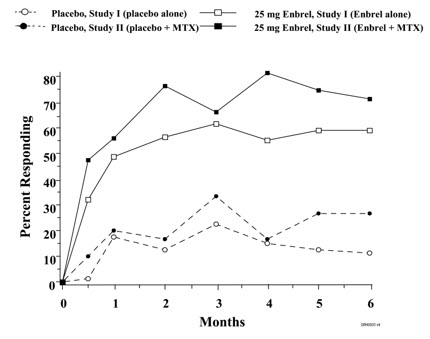
Four main studies tested Enbrel in adults with rheumatoid arthritis (RA). RA is a disease that causes joint pain, swelling, and stiffness.
Study I
This study included 234 adults with active RA. Patients had tried at least one but no more than four other RA medicines without good results. They had at least 12 painful joints and 10 swollen joints. Patients received either 10 mg Enbrel, 25 mg Enbrel, or placebo (inactive pill) as a shot under the skin twice a week for 6 months.
Study II
This study included 89 adults with active RA who had also been taking a stable dose of methotrexate (MTX) for at least 6 months. They received either 25 mg Enbrel or placebo twice a week for 6 months, plus their regular MTX.
Study III
This study compared Enbrel to methotrexate in 632 adults with early active RA who had never taken methotrexate. Patients received either 10 mg Enbrel, 25 mg Enbrel, or methotrexate pills for 12 months. This study continued for up to 2 years.
Study IV
This study included 682 adults with RA lasting 6 months to 20 years. They had not responded well to at least one RA medicine (not including methotrexate). Patients were placed into three groups: methotrexate alone, Enbrel alone, or both Enbrel and methotrexate together.
Results in Rheumatoid Arthritis
More patients who took Enbrel showed improvement in their RA symptoms compared to those who took placebo or methotrexate alone. Improvement was measured using ACR scores (ACR 20, ACR 50, ACR 70). These scores show how much pain, swelling, and other symptoms improved:
– ACR 20 means at least 20% improvement
– ACR 50 means at least 50% improvement
– ACR 70 means at least 70% improvement
In Study I, at 6 months:
– 11% of placebo patients had ACR 20 improvement
– 59% of Enbrel patients had ACR 20 improvement
In Study III at 12 months:
– 65% of methotrexate patients had ACR 20 improvement
– 72% of Enbrel patients had ACR 20 improvement
In Study IV at 12 months:
– 59% of methotrexate alone patients had ACR 20 improvement
– 66% of Enbrel alone patients had ACR 20 improvement
– 75% of patients taking both Enbrel and methotrexate had ACR 20 improvement
The combination of Enbrel and methotrexate worked better than either medicine alone.
Most patients started to feel better within 1 to 2 weeks after starting Enbrel. Almost all patients who improved did so within 3 months.
After stopping Enbrel, RA symptoms usually came back within about 1 month. If patients started taking Enbrel again, they improved just as much as before.
Physical Function
The studies also measured how well patients could move and do daily activities. Patients taking Enbrel showed greater improvement in their ability to move and function compared to placebo. In Study I, patients went from having moderate trouble moving to having mild trouble moving after 6 months of Enbrel treatment.
X-Ray Results
Studies looked at joint damage using X-rays. In Study III, patients taking Enbrel had less joint damage progression compared to patients taking methotrexate. After 12 months, patients taking methotrexate had more joint damage (score of 1.59) compared to patients taking Enbrel (score of 1.00).
In Study IV, patients taking both Enbrel and methotrexate had the least joint damage progression.
Once Weekly Dosing
Another study tested giving 50 mg Enbrel as one shot once a week instead of two 25 mg shots twice a week. The results were similar to taking 25 mg twice a week.
—
Polyarticular Juvenile Idiopathic Arthritis
This study tested Enbrel in 69 children ages 2 to 17 with polyarticular JIA. This is a type of arthritis that affects many joints in children.
Children received Enbrel as a shot under the skin twice a week for 3 months. Then, children who responded well were split into two groups: one group kept taking Enbrel, and another group received placebo for 4 months.
Results showed:
– 51 of 69 children (74%) responded well to Enbrel and entered the next part of the study
– In the placebo group, 20 of 26 children (77%) had their disease flare up
– Only 6 of 25 children (24%) who kept taking Enbrel had a flare up
Children who kept taking Enbrel maintained their improvement. Many children who responded well to Enbrel continued to improve for up to 48 months.
—
Psoriatic Arthritis
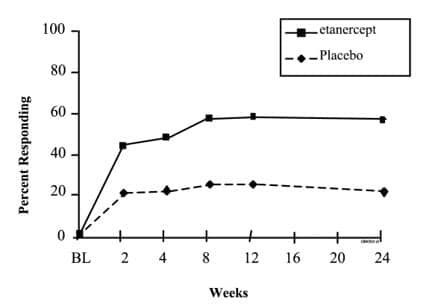
This study tested Enbrel in 205 adults with psoriatic arthritis (PsA). PsA causes joint pain and swelling along with skin psoriasis.
Patients received either 25 mg Enbrel or placebo as a shot twice a week for 6 months.
Results at 6 months:
– 50% of Enbrel patients achieved ACR 20 improvement
– 13% of placebo patients achieved ACR 20 improvement
– 37% of Enbrel patients achieved ACR 50 improvement
– 4% of placebo patients achieved ACR 50 improvement
Improvements were seen as early as the first visit (4 weeks).
Skin psoriasis also improved. At 6 months:
– 47% of Enbrel patients had at least 50% improvement in their psoriasis skin score
– 18% of placebo patients had at least 50% improvement
Physical function also improved more in Enbrel patients. Patients taking Enbrel had a 54% improvement in their ability to do daily activities, compared to 6% in the placebo group.
X-rays showed that Enbrel slowed down joint damage. Most patients showed little or no change in joint damage over 24 months while taking Enbrel.
—
Ankylosing Spondylitis
This study tested Enbrel in 277 adults with active ankylosing spondylitis. This is a type of arthritis that mainly affects the spine.
Patients received either 25 mg Enbrel or placebo as a shot twice a week for 6 months.
Results at 12 weeks:
– 60% of Enbrel patients achieved ASAS 20 improvement
– 27% of placebo patients achieved ASAS 20 improvement
– 45% of Enbrel patients achieved ASAS 50 improvement
– 13% of placebo patients achieved ASAS 50 improvement
Similar results were seen at 6 months. Enbrel helped reduce back pain, stiffness, and improved function.
—
Adult Plaque Psoriasis
Two studies tested Enbrel in adults with moderate to severe plaque psoriasis. This is a skin condition that causes red, scaly patches.
Study I
672 adults received either placebo or Enbrel at different doses for 3 months. After 3 months, placebo patients started taking Enbrel, and the study continued for another 3 months.
Results at 3 months:
– 4% of placebo patients had at least 75% improvement in their psoriasis (PASI 75)
– 14% of patients taking 25 mg once a week had PASI 75
– 32% of patients taking 25 mg twice a week had PASI 75
– 47% of patients taking 50 mg twice a week had PASI 75
Higher doses worked better.
Study II
611 adults received either placebo or Enbrel for 3 months.
Results at 3 months:
– 3% of placebo patients had PASI 75
– 32% of patients taking 25 mg twice a week had PASI 75
– 46% of patients taking 50 mg twice a week had PASI 75
Most patients who responded well to Enbrel kept their improvement when they continued treatment. Patients who stopped Enbrel usually had their psoriasis come back within 1 to 2 months.
—
Pediatric Plaque Psoriasis
This study tested Enbrel in 211 children ages 4 to 17 with moderate to severe plaque psoriasis.
Children received either Enbrel or placebo as a shot once a week for 12 weeks. After 12 weeks, all children received Enbrel for 24 more weeks.
Results at 12 weeks:
– 11% of placebo patients had at least 75% improvement in psoriasis
– 57% of Enbrel patients had at least 75% improvement
At 12 weeks:
– 13% of placebo patients had clear or almost clear skin
– 52% of Enbrel patients had clear or almost clear skin
Children who kept taking Enbrel maintained their improvement. When children who responded well were taken off Enbrel for 12 weeks, 65% still kept their improvement compared to 49% of those who switched to placebo.
| Placebo-Controlled | Active-Controlled | |||||
|---|---|---|---|---|---|---|
| Study I | Study II | Study III | ||||
| Placebo | Enbrel* | MTX/Placebo | MTX/Enbrel* | MTX | Enbrel* | |
| Response | N = 80 | N = 78 | N = 30 | N = 59 | N = 217 | N = 207 |
| ACR 20 | ||||||
| Month 3 | 23% | 62%† | 33% | 66%† | 56% | 62% |
| Month 6 | 11% | 59%† | 27% | 71%† | 58% | 65% |
| Month 12 | NA | NA | NA | NA | 65% | 72% |
| ACR 50 | ||||||
| Month 3 | 8% | 41%† | 0% | 42%† | 24% | 29% |
| Month 6 | 5% | 40%† | 3% | 39%† | 32% | 40% |
| Month 12 | NA | NA | NA | NA | 43% | 49% |
| ACR 70 | ||||||
| Month 3 | 4% | 15%† | 0% | 15%† | 7% | 13%‡ |
| Month 6 | 1% | 15%† | 0% | 15%† | 14% | 21%‡ |
| Month 12 | NA | NA | NA | NA | 22% | 25% |
| Endpoint | MTX (N = 228) |
Enbrel (N = 223) |
Enbrel/MTX (N = 231) |
|---|---|---|---|
|
|||
| ACR N*, † | |||
| Month 12 | 40% | 47% | 63%‡ |
| ACR 20 | |||
| Month 12 | 59% | 66% | 75%‡ |
| ACR 50 | |||
| Month 12 | 36% | 43% | 63%‡ |
| ACR 70 | |||
| Month 12 | 17% | 22% | 40%‡ |
| Major Clinical Response§ | 6% | 10% | 24%‡ |
|
|
| Placebo N = 80 |
Enbrel*
N = 78 |
|||
|---|---|---|---|---|
| Parameter (median) | Baseline | 3 Months | Baseline | 3 Months† |
|
||||
| Number of tender joints ‡ | 34.0 | 29.5 | 31.2 | 10.0§ |
| Number of swollen joints ¶ | 24.0 | 22.0 | 23.5 | 12.6§ |
| Physician global assessment # | 7.0 | 6.5 | 7.0 | 3.0§ |
| Patient global assessment # | 7.0 | 7.0 | 7.0 | 3.0§ |
| Pain # | 6.9 | 6.6 | 6.9 | 2.4§ |
| Disability index Þ | 1.7 | 1.8 | 1.6 | 1.0§ |
| ESR (mm/hr) | 31.0 | 32.0 | 28.0 | 15.5§ |
| CRP (mg/dL) | 2.8 | 3.9 | 3.5 | 0.9§ |
| MTX | 25 mg Enbrel | MTX/Enbrel (95% Confidence Interval*) |
P Value | ||
|---|---|---|---|---|---|
|
|||||
| 12 Months | Total Sharp Score | 1.59 | 1.00 | 0.59 (-0.12, 1.30) | 0.1 |
| Erosion Score | 1.03 | 0.47 | 0.56 (0.11, 1.00) | 0.002 | |
| JSN Score | 0.56 | 0.52 | 0.04 (-0.39, 0.46) | 0.5 | |
| 6 Months | Total Sharp Score | 1.06 | 0.57 | 0.49 (0.06, 0.91) | 0.001 |
| Erosion Score | 0.68 | 0.30 | 0.38 (0.09, 0.66) | 0.001 | |
| JSN Score | 0.38 | 0.27 | 0.11 (-0.14, 0.35) | 0.6 | |
| MTX (N = 212)* |
Enbrel (N = 212)* |
Enbrel/MTX (N = 218)* |
|
|---|---|---|---|
| Total Sharp Score (TSS) | 2.80 (1.08, 4.51) |
0.52†
(-0.10, 1.15) |
-0.54‡,§
(-1.00, -0.07) |
| Erosion Score (ES) | 1.68 (0.61, 2.74) |
0.21†
(-0.20, 0.61) |
-0.30‡
(-0.65, 0.04) |
| Joint Space Narrowing (JSN) Score | 1.12 (0.34, 1.90) |
0.32 (0.00, 0.63) |
-0.23‡,§
(-0.45, -0.02) |
| Placebo N = 104 |
Enbrel*
N = 101 |
|||
|---|---|---|---|---|
| Parameter (median) | Baseline | 6 Months | Baseline | 6 Months |
|
||||
| Number of tender joints† | 17.0 | 13.0 | 18.0 | 5.0 |
| Number of swollen joints‡ | 12.5 | 9.5 | 13.0 | 5.0 |
| Physician global assessment§ | 3.0 | 3.0 | 3.0 | 1.0 |
| Patient global assessment§ | 3.0 | 3.0 | 3.0 | 1.0 |
| Morning stiffness (minutes) | 60 | 60 | 60 | 15 |
| Pain§ | 3.0 | 3.0 | 3.0 | 1.0 |
| Disability index¶ | 1.0 | 0.9 | 1.1 | 0.3 |
| CRP (mg/dL)# | 1.1 | 1.1 | 1.6 | 0.2 |
| Figure 2. ASAS 20 Responses in Ankylosing Spondylitis |
|---|
![]() |
| Placebo N = 139 |
Enbrel*
N = 138 |
|||
|---|---|---|---|---|
| Median values at time points | Baseline | 6 Months | Baseline | 6 Months |
|
||||
| ASAS response criteria | ||||
| Patient global assessment † | 63 | 56 | 63 | 36 |
| Back pain ‡ | 62 | 56 | 60 | 34 |
| BASFI § | 56 | 55 | 52 | 36 |
| Inflammation ¶ | 64 | 57 | 61 | 33 |
| Acute phase reactants | ||||
| CRP (mg/dL) # | 2.0 | 1.9 | 1.9 | 0.6 |
| Spinal mobility (cm): | ||||
| Modified Schober’s test | 3.0 | 2.9 | 3.1 | 3.3 |
| Chest expansion | 3.2 | 3.0 | 3.3 | 3.9 |
| Occiput-to-wall measurement | 5.3 | 6.0 | 5.6 | 4.5 |
| Placebo/Enbrel | Enbrel/Enbrel | |||
|---|---|---|---|---|
| 25 mg BIW | 25 mg QW | 25 mg BIW | 50 mg BIW | |
| (N = 168) | (N = 169) | (N = 167) | (N = 168) | |
| 3 Months | ||||
| PASI 75 n (%) | 6 (4%) | 23 (14%)* | 53 (32%)† | 79 (47%)† |
| Difference (95% CI) |
10% (4, 16) | 28% (21, 36) | 43% (35, 52) | |
| sPGA, “clear” or “minimal” n (%) | 8 (5%) | 36 (21%)† | 53 (32%)† | 79 (47%)† |
| Difference (95% CI) |
17% (10, 24) | 27% (19, 35) | 42% (34, 50) | |
| PASI 50 n (%) | 24 (14%) | 62 (37%)† | 90 (54%)† | 119 (71%)† |
| Difference (95% CI) |
22% (13, 31) | 40% (30, 49) | 57% (48, 65) | |
| 6 Months | ||||
| PASI 75 n (%) | 55 (33%) | 36 (21%) | 68 (41%) | 90 (54%) |
| Placebo | Enbrel | ||
|---|---|---|---|
| 25 mg BIW | 50 mg BIW | ||
| (N = 204) | (N = 204) | (N = 203) | |
|
|||
| PASI 75 n (%) | 6 (3%) | 66 (32%)* | 94 (46%)* |
| Difference (95% CI) | 29% (23, 36) | 43% (36, 51) | |
| sPGA, “clear” or “minimal” n (%) | 7 (3%) | 75 (37%)* | 109 (54%)* |
| Difference (95% CI) | 34% (26, 41) | 50% (43, 58) | |
| PASI 50 n (%) | 18 (9%) | 124 (61%)* | 147 (72%)* |
| Difference (95% CI) | 52% (44, 60) | 64% (56, 71) | |
| Placebo (N = 105) |
Enbrel 0.8 mg/kg Once Weekly (N = 106) |
|
|---|---|---|
| PASI 75, n (%) | 12 (11%) | 60 (57%) |
| PASI 90, n (%) | 7 (7%) | 29 (27%) |
| sPGA “clear” or “almost clear” n (%) | 14 (13%) | 55 (52%) |
14.1 Adult Rheumatoid Arthritis
The safety and efficacy of Enbrel were assessed in four randomized, double-blind, controlled studies. The results of all four trials were expressed in percentage of patients with improvement in RA using ACR response criteria.
Study I evaluated 234 patients with active RA who were ≥ 18 years old, had failed therapy with at least one but no more than four disease-modifying antirheumatic drugs (DMARDs) (e.g. hydroxychloroquine, oral or injectable gold, MTX, azathioprine, D-penicillamine, sulfasalazine), and had ≥ 12 tender joints, ≥ 10 swollen joints, and either erythrocyte sedimentation rate (ESR) ≥ 28 mm/hr, C-reactive protein (CRP) > 2.0 mg/dL, or morning stiffness for ≥ 45 minutes. Doses of 10 mg or 25 mg Enbrel or placebo were administered SC twice a week for 6 consecutive months.
Study II evaluated 89 patients and had similar inclusion criteria to Study I except that patients in Study II had additionally received MTX for at least 6 months with a stable dose (12.5 to 25 mg/week) for at least 4 weeks and they had at least 6 tender or painful joints. Patients in Study II received a dose of 25 mg Enbrel or placebo SC twice a week for 6 months in addition to their stable MTX dose.
Study III compared the efficacy of Enbrel to MTX in patients with active RA. This study evaluated 632 patients who were ≥ 18 years old with early (≤ 3 years disease duration) active RA, had never received treatment with MTX, and had ≥ 12 tender joints, ≥ 10 swollen joints, and either ESR ≥ 28 mm/hr, CRP > 2.0 mg/dL, or morning stiffness for ≥ 45 minutes. Doses of 10 mg or 25 mg Enbrel were administered SC twice a week for 12 consecutive months. The study was unblinded after all patients had completed at least 12 months (and a median of 17.3 months) of therapy. The majority of patients remained in the study on the treatment to which they were randomized through 2 years, after which they entered an extension study and received open-label 25 mg Enbrel. MTX tablets (escalated from 7.5 mg/week to a maximum of 20 mg/week over the first 8 weeks of the trial) or placebo tablets were given once a week on the same day as the injection of placebo or Enbrel doses, respectively.
Study IV evaluated 682 adult patients with active RA of 6 months to 20 years duration (mean of 7 years) who had an inadequate response to at least one DMARD other than MTX. Forty-three percent of patients had previously received MTX for a mean of 2 years prior to the trial at a mean dose of 12.9 mg. Patients were excluded from this study if MTX had been discontinued for lack of efficacy or for safety considerations. The patient baseline characteristics were similar to those of patients in Study I. Patients were randomized to MTX alone (7.5 to 20 mg weekly, dose escalated as described for Study III; median dose 20 mg), Enbrel alone (25 mg twice weekly), or the combination of Enbrel and MTX initiated concurrently (at the same doses as above). The study evaluated ACR response, Sharp radiographic score, and safety.
Clinical Response
| Placebo-Controlled | Active-Controlled | |||||
|---|---|---|---|---|---|---|
| Study I | Study II | Study III | ||||
| Placebo | Enbrel* | MTX/Placebo | MTX/Enbrel* | MTX | Enbrel* | |
| Response | N = 80 | N = 78 | N = 30 | N = 59 | N = 217 | N = 207 |
| ACR 20 | ||||||
| Month 3 | 23% | 62%† | 33% | 66%† | 56% | 62% |
| Month 6 | 11% | 59%† | 27% | 71%† | 58% | 65% |
| Month 12 | NA | NA | NA | NA | 65% | 72% |
| ACR 50 | ||||||
| Month 3 | 8% | 41%† | 0% | 42%† | 24% | 29% |
| Month 6 | 5% | 40%† | 3% | 39%† | 32% | 40% |
| Month 12 | NA | NA | NA | NA | 43% | 49% |
| ACR 70 | ||||||
| Month 3 | 4% | 15%† | 0% | 15%† | 7% | 13%‡ |
| Month 6 | 1% | 15%† | 0% | 15%† | 14% | 21%‡ |
| Month 12 | NA | NA | NA | NA | 22% | 25% |
| Endpoint | MTX (N = 228) |
Enbrel (N = 223) |
Enbrel/MTX (N = 231) |
|---|---|---|---|
|
|||
| ACR N*, † | |||
| Month 12 | 40% | 47% | 63%‡ |
| ACR 20 | |||
| Month 12 | 59% | 66% | 75%‡ |
| ACR 50 | |||
| Month 12 | 36% | 43% | 63%‡ |
| ACR 70 | |||
| Month 12 | 17% | 22% | 40%‡ |
| Major Clinical Response§ | 6% | 10% | 24%‡ |
|
|
| Placebo N = 80 |
Enbrel*
N = 78 |
|||
|---|---|---|---|---|
| Parameter (median) | Baseline | 3 Months | Baseline | 3 Months† |
|
||||
| Number of tender joints ‡ | 34.0 | 29.5 | 31.2 | 10.0§ |
| Number of swollen joints ¶ | 24.0 | 22.0 | 23.5 | 12.6§ |
| Physician global assessment # | 7.0 | 6.5 | 7.0 | 3.0§ |
| Patient global assessment # | 7.0 | 7.0 | 7.0 | 3.0§ |
| Pain # | 6.9 | 6.6 | 6.9 | 2.4§ |
| Disability index Þ | 1.7 | 1.8 | 1.6 | 1.0§ |
| ESR (mm/hr) | 31.0 | 32.0 | 28.0 | 15.5§ |
| CRP (mg/dL) | 2.8 | 3.9 | 3.5 | 0.9§ |
| MTX | 25 mg Enbrel | MTX/Enbrel (95% Confidence Interval*) |
P Value | ||
|---|---|---|---|---|---|
|
|||||
| 12 Months | Total Sharp Score | 1.59 | 1.00 | 0.59 (-0.12, 1.30) | 0.1 |
| Erosion Score | 1.03 | 0.47 | 0.56 (0.11, 1.00) | 0.002 | |
| JSN Score | 0.56 | 0.52 | 0.04 (-0.39, 0.46) | 0.5 | |
| 6 Months | Total Sharp Score | 1.06 | 0.57 | 0.49 (0.06, 0.91) | 0.001 |
| Erosion Score | 0.68 | 0.30 | 0.38 (0.09, 0.66) | 0.001 | |
| JSN Score | 0.38 | 0.27 | 0.11 (-0.14, 0.35) | 0.6 | |
| MTX (N = 212)* |
Enbrel (N = 212)* |
Enbrel/MTX (N = 218)* |
|
|---|---|---|---|
| Total Sharp Score (TSS) | 2.80 (1.08, 4.51) |
0.52†
(-0.10, 1.15) |
-0.54‡,§
(-1.00, -0.07) |
| Erosion Score (ES) | 1.68 (0.61, 2.74) |
0.21†
(-0.20, 0.61) |
-0.30‡
(-0.65, 0.04) |
| Joint Space Narrowing (JSN) Score | 1.12 (0.34, 1.90) |
0.32 (0.00, 0.63) |
-0.23‡,§
(-0.45, -0.02) |
| Placebo N = 104 |
Enbrel*
N = 101 |
|||
|---|---|---|---|---|
| Parameter (median) | Baseline | 6 Months | Baseline | 6 Months |
|
||||
| Number of tender joints† | 17.0 | 13.0 | 18.0 | 5.0 |
| Number of swollen joints‡ | 12.5 | 9.5 | 13.0 | 5.0 |
| Physician global assessment§ | 3.0 | 3.0 | 3.0 | 1.0 |
| Patient global assessment§ | 3.0 | 3.0 | 3.0 | 1.0 |
| Morning stiffness (minutes) | 60 | 60 | 60 | 15 |
| Pain§ | 3.0 | 3.0 | 3.0 | 1.0 |
| Disability index¶ | 1.0 | 0.9 | 1.1 | 0.3 |
| CRP (mg/dL)# | 1.1 | 1.1 | 1.6 | 0.2 |
| Figure 2. ASAS 20 Responses in Ankylosing Spondylitis |
|---|
![]() |
| Placebo N = 139 |
Enbrel*
N = 138 |
|||
|---|---|---|---|---|
| Median values at time points | Baseline | 6 Months | Baseline | 6 Months |
|
||||
| ASAS response criteria | ||||
| Patient global assessment † | 63 | 56 | 63 | 36 |
| Back pain ‡ | 62 | 56 | 60 | 34 |
| BASFI § | 56 | 55 | 52 | 36 |
| Inflammation ¶ | 64 | 57 | 61 | 33 |
| Acute phase reactants | ||||
| CRP (mg/dL) # | 2.0 | 1.9 | 1.9 | 0.6 |
| Spinal mobility (cm): | ||||
| Modified Schober’s test | 3.0 | 2.9 | 3.1 | 3.3 |
| Chest expansion | 3.2 | 3.0 | 3.3 | 3.9 |
| Occiput-to-wall measurement | 5.3 | 6.0 | 5.6 | 4.5 |
| Placebo/Enbrel | Enbrel/Enbrel | |||
|---|---|---|---|---|
| 25 mg BIW | 25 mg QW | 25 mg BIW | 50 mg BIW | |
| (N = 168) | (N = 169) | (N = 167) | (N = 168) | |
| 3 Months | ||||
| PASI 75 n (%) | 6 (4%) | 23 (14%)* | 53 (32%)† | 79 (47%)† |
| Difference (95% CI) |
10% (4, 16) | 28% (21, 36) | 43% (35, 52) | |
| sPGA, “clear” or “minimal” n (%) | 8 (5%) | 36 (21%)† | 53 (32%)† | 79 (47%)† |
| Difference (95% CI) |
17% (10, 24) | 27% (19, 35) | 42% (34, 50) | |
| PASI 50 n (%) | 24 (14%) | 62 (37%)† | 90 (54%)† | 119 (71%)† |
| Difference (95% CI) |
22% (13, 31) | 40% (30, 49) | 57% (48, 65) | |
| 6 Months | ||||
| PASI 75 n (%) | 55 (33%) | 36 (21%) | 68 (41%) | 90 (54%) |
| Placebo | Enbrel | ||
|---|---|---|---|
| 25 mg BIW | 50 mg BIW | ||
| (N = 204) | (N = 204) | (N = 203) | |
|
|||
| PASI 75 n (%) | 6 (3%) | 66 (32%)* | 94 (46%)* |
| Difference (95% CI) | 29% (23, 36) | 43% (36, 51) | |
| sPGA, “clear” or “minimal” n (%) | 7 (3%) | 75 (37%)* | 109 (54%)* |
| Difference (95% CI) | 34% (26, 41) | 50% (43, 58) | |
| PASI 50 n (%) | 18 (9%) | 124 (61%)* | 147 (72%)* |
| Difference (95% CI) | 52% (44, 60) | 64% (56, 71) | |
| Placebo (N = 105) |
Enbrel 0.8 mg/kg Once Weekly (N = 106) |
|
|---|---|---|
| PASI 75, n (%) | 12 (11%) | 60 (57%) |
| PASI 90, n (%) | 7 (7%) | 29 (27%) |
| sPGA “clear” or “almost clear” n (%) | 14 (13%) | 55 (52%) |


Reading the Medication Guide
Read the Medication Guide before using Enbrel and each time you get a new prescription. There may be new information you need to know.
Infections
Enbrel can lower your body’s ability to fight infections. Call your doctor right away if you develop signs of infection, tuberculosis, or hepatitis B.
Other Medical Conditions
Tell your doctor about any new or worsening health problems. This includes heart problems, lupus, or nerve problems. Enbrel may increase the risk of lymphoma and other cancers. Call your doctor if you have bruising, bleeding, fever, or pale skin.
Allergic Reactions
Get medical help right away if you have severe allergic reaction symptoms.
Giving Yourself Injections
If you give yourself or a caregiver gives you the injection, you will be taught how to do it. Your first injection will be given with a healthcare professional watching.
For the SureClick injector: The window turns yellow when the dose is complete. If it does not turn yellow or medicine is still flowing, you did not get the full dose. Call your doctor right away.
For the AutoTouch injector: The button turns green when it touches your skin, flashes green during injection, and turns off when done. If the button turns red after removing it, or if medicine is still flowing, you did not get the full dose. Call 1-888-436-2735 right away.
Use a special container to throw away needles and syringes. Do not reuse needles.
Contact Information
Call 1-888-436-2735 or visit www.enbrel.com for more information.
Advise the patient and/or caregiver to read the FDA-approved patient labeling (Medication Guide and Instructions for Use) before the patient starts using Enbrel, and each time the prescription is renewed, as there may be new information they need to know.
Patients or their caregivers should be provided the Enbrel “Medication Guide” and provided an opportunity to read it and ask questions prior to initiation of therapy. The healthcare provider should ask the patient questions to determine any risk factors for treatment. Patients developing signs and symptoms of infection should seek medical evaluation immediately.
Patient Counseling
Patients should be advised of the potential benefits and risks of Enbrel. Physicians should instruct their patients to read the Medication Guide before starting Enbrel therapy and to reread each time the prescription is renewed.
Infections
Inform patients that Enbrel may lower the ability of their immune system to fight infections. Advise patients of the importance of contacting their doctor if they develop any symptoms of infection, tuberculosis or reactivation of hepatitis B virus infections.
Other Medical Conditions
Advise patients to report any signs of new or worsening medical conditions, such as central nervous system demyelinating disorders, heart failure or autoimmune disorders, such as lupus-like syndrome or autoimmune hepatitis. Counsel about the risk of lymphoma and other malignancies while receiving Enbrel. Advise patients to report any symptoms suggestive of a pancytopenia, such as bruising, bleeding, persistent fever or pallor.
Allergic Reactions
Advise patients to seek immediate medical attention if they experience any symptoms of severe allergic reactions.
Administration of Enbrel
If a patient or caregiver is to administer Enbrel, the patient or caregiver should be instructed in injection techniques and how to measure and administer the correct dose [see “Instructions for Use”]. For weight-based dosing, instruct caregivers and patients on the proper techniques for preparing, storing, measuring, and administering Enbrel solution in a single-dose vial or reconstituted lyophilized powder in a multiple-dose vial.
The first injection should be performed under the supervision of a qualified healthcare professional. The patient’s or caregiver’s ability to inject subcutaneously should be assessed. Patients and caregivers should be instructed in the technique, as well as proper syringe and needle disposal, and be cautioned against reuse of needles and syringes.
When using the SureClick autoinjector to administer Enbrel, the patient or caregiver should be informed that the window turns yellow when the injection is complete. After removing the autoinjector, if the window has not turned yellow, or if it looks like the medicine is still injecting, this means the patient has not received a full dose. The patient or caregiver should be advised to call their healthcare provider immediately.
When using the AutoTouch reusable autoinjector to administer Enbrel, the patient or caregiver should be informed that the status button turns green upon contact with the skin, flashes green after starting the injection, and turns off at completion of the injection. After removing the AutoTouch reusable autoinjector from the skin, if the status button has turned red, the patient or caregiver should be advised to call 1-888-4Enbrel (1-888-436-2735) immediately. If it looks like the medicine is still injecting or there is still fluid in Enbrel Mini, this means the patient has not received a full dose. The patient or caregiver should be advised to call their healthcare provider immediately.
A puncture-resistant container for disposal of needles, syringes, SureClick autoinjectors, single-dose vials, and Enbrel Mini cartridges should be used. If the product is intended for multiple use, additional syringes, needles and alcohol swabs will be required.
Patients can be advised to call 1-888-4ENBREL (1-888-436-2735) or visit www.enbrel.com for more information about Enbrel.
Related Medications
Treats These Conditions
This medication is not currently linked to any conditions.
References
ENBREL (etanercept) [prescribing information]. April 2026. Available at: https://dailymed.nlm.nih.gov/dailymed/drugInfo.cfm?setid=a002b40c-097d-47a5-957f-7a7b1807af7f
Accessed: July 1, 2026

